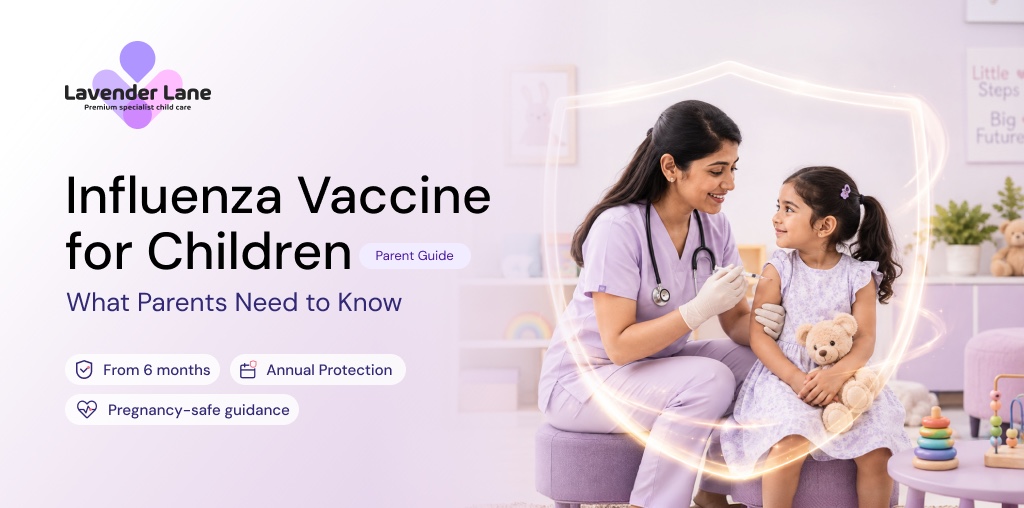
Influenza is a contagious respiratory infection caused by influenza viruses. It can lead to fever, cough, sore throat, body aches, fatigue and, in some cases, serious complications.
The World Health Organization estimates that seasonal influenza causes around one billion infections globally each year, including 3 to 5 million cases of severe illness. Young children, pregnant women and people with certain chronic health conditions face a higher risk of complications.
The influenza vaccine cannot prevent every infection, but it can reduce the risk of influenza, medical visits, hospitalization and severe illness. Understanding who needs the vaccine, when it should be given and how many doses a child may require helps parents make an informed decision.
Why Flu Vaccination Matters
Influenza is different from the common cold. Both can cause cough, congestion and tiredness, but influenza often begins suddenly and may cause higher fever, significant body aches and marked fatigue.
Most children recover without serious problems. However, influenza can sometimes lead to pneumonia, dehydration, ear infections or worsening of conditions such as asthma. It can also result in missed school, interrupted sleep and additional medical visits.
The seasonal influenza vaccine prepares the immune system to recognize selected influenza viruses. A vaccinated child may still get influenza because circulating viruses change and vaccine effectiveness varies by season. Even so, vaccination can lower the risk of illness and serious complications. It does not prevent ordinary colds or every viral fever.
Who Can Receive the Influenza Vaccine?
Influenza vaccination can begin from six months of age.
The Indian Academy of Paediatrics immunization schedule lists the first inactivated influenza vaccine dose at six months and the second at seven months, followed by annual vaccination through five years of age. The appropriate schedule for an older child depends on previous vaccination, health conditions and individual clinical assessment.
Vaccination deserves particular attention for:
- Children younger than five years
- Children with asthma, diabetes or other chronic conditions
- Children with weakened immune systems
- Pregnant women
- Family members who live with infants younger than six months
- People who regularly care for young children
Babies younger than six months cannot receive their own influenza vaccine. Protection during this period depends partly on vaccination during pregnancy, vaccination of eligible household members and reducing exposure to people with respiratory infections.
Does a Child Need One Dose or Two?
A child's age and previous influenza vaccination history determine the number of doses required.
Some children aged six months through eight years need two doses during the same season. This generally applies when the child has never received a seasonal influenza vaccine, has an unknown vaccination history or has not previously received at least two doses given at least four weeks apart.
When two doses are required, they should be administered at least four weeks apart. Children aged nine years and older generally receive one seasonal dose. Previous doses do not have to have been given during the same or consecutive seasons.
Parents should carry the child's vaccination record to the appointment. The record is more useful than relying on memory, especially when determining whether one or two doses are needed.
Why Is the Vaccine Given Every Year?
Influenza viruses change over time. Protection from a previous vaccination can also decrease.
Health authorities review circulating influenza strains and update seasonal vaccine recommendations. This is why a flu shot received in a previous year does not replace the current seasonal vaccine.
The latest IAP-ACVIP recommendation supports a trivalent influenza vaccine containing components against A(H1N1), A(H3N2) and B/Victoria. The earlier B/Yamagata component is no longer included in the recommended trivalent formulation.
The vaccine available at a clinic should be appropriate for the person's age, current health and the latest seasonal guidance.
Is the Flu Vaccine Safe for Children?
An injectable influenza vaccine cannot give a child influenza. The vaccine contains inactivated virus or non-infectious components that help the immune system develop a response.
Common side effects may include:
- Pain, redness or swelling at the injection site
- Mild fever
- Headache
- Muscle aches
- Tiredness
These reactions are usually mild and short-lived. A severe allergic reaction is rare, but vaccination should take place in a setting equipped to assess and manage unexpected reactions.
Tell the paediatrician if the child has had a serious reaction to a previous influenza vaccine, has a history of Guillain-Barré syndrome, is currently unwell or has significant allergies.
A minor cold does not always require vaccination to be postponed. A child with moderate or severe illness, particularly with fever, may be advised to wait until recovery. The decision should be made after clinical assessment.
When Should Children Get the Flu Vaccine?
Influenza can circulate throughout the year in tropical regions, and seasonal peaks may differ between locations. Parents should not depend on a single fixed month without considering local influenza activity and medical advice.
The immune response generally takes about two weeks to develop after vaccination. Children who require two doses should begin early enough to receive the second dose at least four weeks later.
Vaccination may still be useful after influenza activity has started. Parents should ask their paediatrician about the current vaccine, the child's dose history and the most appropriate timing.
Flu Vaccination During Pregnancy
Pregnancy increases the risk of influenza-related illness that may require hospitalisation. An injectable influenza vaccine can be administered during any trimester of pregnancy.
The live nasal-spray influenza vaccine should not be used during pregnancy. Vaccination during pregnancy also allows protective antibodies to pass to the developing baby, offering some protection during the first months after birth, when the infant is too young to receive an influenza vaccine.
Pregnant women should discuss vaccination with their obstetrician or treating doctor, particularly when they have allergies, an ongoing illness or a history of vaccine reactions.
Child Flu Vaccination at Lavender Lane
Before an influenza vaccine is given, the child's age, previous doses, current health, allergies and medical history should be reviewed.
Lavender Lane provides paediatric flu vaccination and preventive child healthcare in Sector 90, Noida. Parents can consult the clinical team to confirm whether their child needs one dose or two, discuss the appropriate timing and understand what to expect after vaccination.
Lavender Circle is an optional ongoing-care membership that provides access to eligible paediatric services and member benefits. Vaccination and membership remain separate decisions. Parents can book a vaccination without joining the membership.
Care After the Vaccination Visit
Questions do not always end when the appointment does.
A child may develop mild fever, soreness, reduced appetite or tiredness after vaccination. Parents may need to know whether a reaction is expected, whether the child can attend school or when another assessment is required.
Lavender Circle extends access beyond the clinic visit. Its current membership benefits include eligible in-clinic paediatric consultations, 24×7 tele-paediatric access on WhatsApp, a WhatsApp Health Vault and preferred rates on eligible vaccines, specialist consultations and tests.
The membership remains optional. Parents can book a child flu vaccination without joining Lavender Circle. Families considering ongoing paediatric access can review the membership separately from the vaccination decision.
Common Questions About Influenza Vaccine for Children
- Can the flu vaccine give my child influenza?
- No. Injectable influenza vaccines cannot cause influenza. Mild fever, soreness or tiredness after vaccination reflects an immune response and is not the same as influenza infection.
- Can a vaccinated child still get influenza?
- Yes. No influenza vaccine provides complete protection. Effectiveness changes according to the child's age, health, circulating strains and how closely the vaccine matches those strains. Vaccination can still reduce the risk and severity of illness.
- Does the seasonal flu vaccine protect against H1N1?
- H1N1 is a subtype of influenza A, not a separate category of seasonal illness. The trivalent influenza vaccine recommended by IAP includes an A(H1N1) component along with A(H3N2) and B/Victoria components.
- Can the flu vaccine treat an active influenza infection?
- No. The influenza vaccine is preventive. It does not treat an infection that has already started. A child with persistent fever, breathing difficulty, unusual sleepiness, poor fluid intake or worsening symptoms should receive medical assessment.
- How long does the flu vaccine take to work?
- The immune response generally develops over approximately two weeks. Protection is not immediate, which is particularly important when planning vaccination before travel or expected influenza activity.
This article provides general health information and does not replace medical advice. Vaccine suitability, formulation, timing and dose count depend on age, previous vaccination, current health, pregnancy and clinical history. Seek urgent medical care for breathing difficulty, severe dehydration, seizures, altered consciousness or other emergency symptoms.
Book a child influenza vaccination review at Lavender Lane
Current vaccine availability, appointment details, pricing and Lavender Circle information should be confirmed through Lavender Lane's dedicated flu-vaccination page or booking channel.
See flu vaccine details