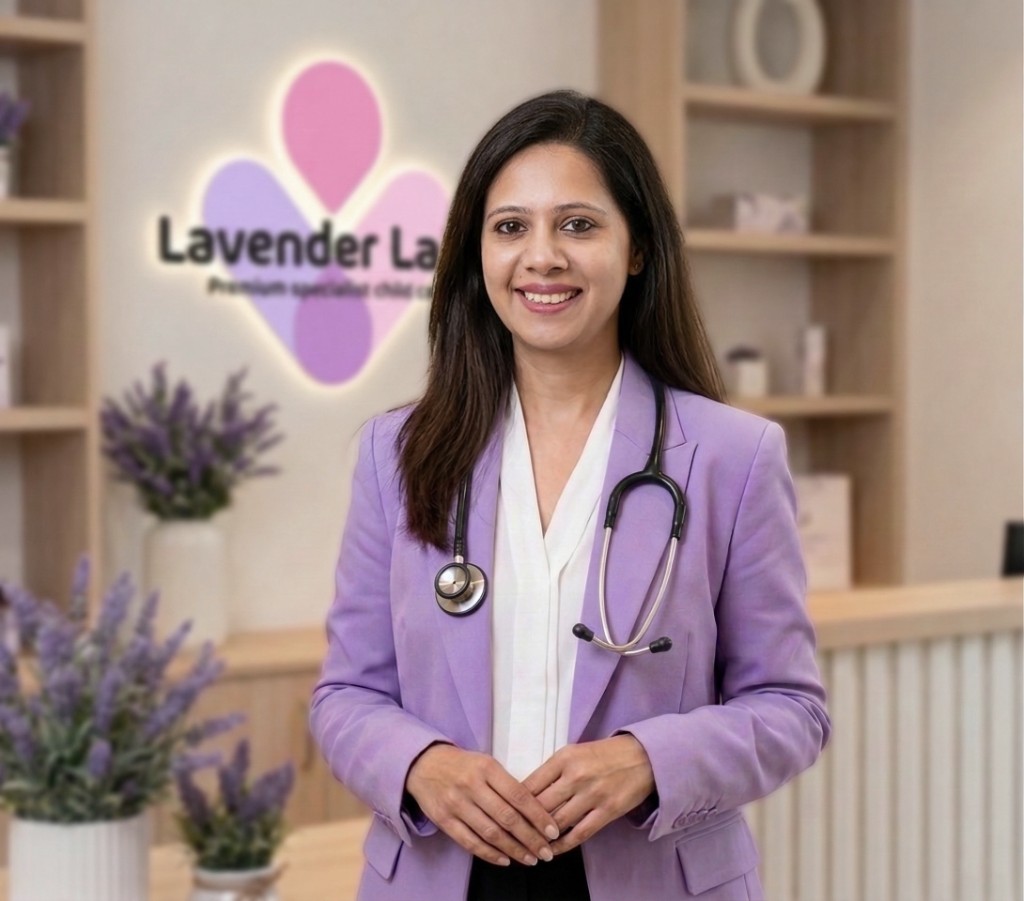
More than a decade of clinical practice across some of India's largest paediatric programmes, including private hospitals like BLK-Max, Jaypee Hospital, and Max Super Speciality, and government hospitals like Postgraduate Institute of Child Health, and ESIC Faridabad.
For well over a decade, I have been deeply immersed in this work. When I first set out on my journey in Pediatric Oncology, mentors and well-wishers alike urged me to reconsider my decision — cautioning me against entering what many called a "grey" domain of pediatrics. But I chose to listen to my heart and follow my passion.
Each day, I find genuine fulfillment in what I do, and I remain grateful to the Almighty for blessing me with the patience, perseverance, and capability that allows me to continue doing what I love, in spite of the very real challenges that come with practicing any Pediatric Superspeciality in India. If anything, those challenges have only deepened my commitment.
Along this journey, I discovered another domain that truly fascinated me: Pediatric Bone Marrow Transplantation — an underserved yet critically needed field in India.
A child is not a small adult.
Medicine, when it forgets, forgets this first. A child who is "still playing" can be septic. A child who looks "a little pale" can have a haemoglobin that should not be compatible with standing upright. Half of paediatrics is knowing which child in the waiting room is the one you cannot send home, and that knowing is built slowly, out of thousands of children who turned out to be fine and a small handful who did not. The profile of diseases, and their treatment, differs significantly in children compared to adults, demanding a separate domain of training, research, and practice, to improve outcomes for children, who represent the future of every nation.
In India, paediatrics has long deserved more: more investment, more infrastructure, more intent. A truly world-class paediatric super-speciality centre is still a rarity here, not a standard. The problem is with the vision, the intent, the purpose around which hospitals are built.
Lavender Lane exists to close that gap, driven not by commerce, but by a single, unwavering purpose: exceptional care, exclusively for children and their special needs.
A few things I have come to believe.
All of them original, all of them earned.
-
i
Most childhood illness is, mercifully, ordinary.
And ordinary illness is its own discipline. Knowing when a fever needs nothing more than time and fluids, and when it needs a blood count by evening, is not a lesser skill than the rare-disease work. It is the foundation the rare-disease work stands on.
-
ii
The early years are not a waiting room for the rest of life.
Nutrition in the first thousand days, immunisations on schedule, growth tracked properly rather than glanced at, the early conversations about sleep and screens and the food a family actually eats. These are, in aggregate, the largest single determinant of how a child's adult body and mind will function.
-
iii
The family is the patient.
The child is the one with the diagnosis, but the illness happens to a household. This is true of a long admission for leukaemia and it is true of a week of viral diarrhoea. A good paediatrician treats the child. A useful one treats the family around the child.
-
iv
Paediatrics is not about children alone. The other half is the parents.
A parent who trusts you will bring the child back when something changes. A parent who does not trust you will hesitate, and in a small child, hesitation costs you the hours that mattered. So a great deal of what I do, on any day in any clinic, is the slow work of being trustworthy: explaining things in language a frightened parent can hold on to, and refusing to be in a hurry when a hurry would be cheaper.
And then there is cancer! A scary term, but a curable disease.
Paediatric cancer in India is, more often than not, a curable disease that fails its patients for non-medical reasons. The protocols exist. The drugs exist. The evidence is settled. The specialist paediatric haemato-oncologists exist. What is missing is early diagnosis, a trained physician within reach of the family, the money to complete a two-year protocol without abandoning treatment halfway, and a system that treats the child on the whole, not just the physical illness.
Children are extraordinary patients. They do not grieve their own bodies the way adults do, and they do not, mercifully, lose hope as easily. A six-year-old in the middle of intensive chemotherapy will ask you when she can go back to school. That capacity to live forward, in the middle of difficulty, is what I have learned most from children, and what has, on the days I have needed it most, kept me going through the demanding work of caring for children with blood and cancer disorders.
There is always hope, even in the most serious illnesses of childhood. You simply need to find the right path, and the right team to walk it with you.
Why this work, and why here.
I trained in India and abroad, and I work in India by choice. The children are here. The need is here. And every child in India deserves the best care possible, just like the West. Outside of clinic, I read, I teach, I learn, I write for the lay press, and I am closely involved in the building of Lavender Lane, a paediatric super-speciality centre in Noida that I hope will be the kind of place a parent would want on an ordinary Tuesday and on the worst day of their lives, both.
I am a mother. And being a mother has honestly turned me into a better paediatrician! I am an amateur painter and a traveller in the time the work leaves me. I am, on most days, a person who is grateful to have found something to do that matters.
Thank you for getting this far.
Silky